Specialized Manufacturer Of Tower Cranes And Construction Hoists

Efficient Maintenance Methods for Construction Hoists
1/5/20264 min read
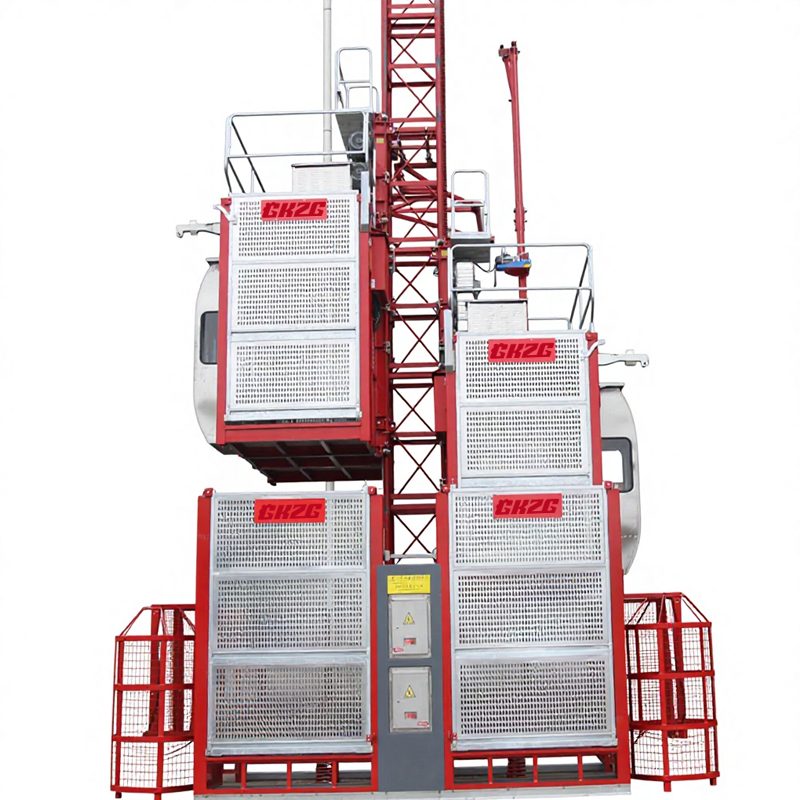
Understanding Construction Hoists and Their Importance
Construction hoists are essential elevating devices used in the construction industry for transporting materials and personnel vertically. These equipment pieces enhance workflow efficiency and safety across various construction sites. In essence, construction hoists serve as critical tools, facilitating the movement of heavy materials such as steel beams and concrete, and allowing workers to reach higher elevations with minimal risk.
Typically, there are two main categories of construction hoists: transport hoists and material hoists. Transport hoists are designed primarily for the conveyance of personnel, while material hoists are tailored for lifting goods, allowing construction teams to operate more effectively from the ground to upper floors. Variants such as rack and pinion hoists or wire rope hoists exist, depending on the project's unique requirements and site conditions.
The benefits of using construction hoists are manifold. Firstly, they significantly improve the speed of material handling, reducing the time spent on transporting items manually, thus contributing to overall project timelines. Secondly, they enhance workplace safety by mitigating the risk of accidents, which can occur during manual lifting or transporting operations. Furthermore, the presence of a hoist allows for a more organized worksite, where materials are moved efficiently, adding to workplace efficiency.
Understanding the operational mechanics of construction hoists is equally crucial. These machines utilize robust technology that comprises various components, including motors, gear systems, and safety devices that work in concert to ensure effective and secure operation. Regular maintenance ensures these systems operate optimally, preventing potential failures that can lead to costly downtimes and safety hazards. With the significant role construction hoists play, comprehending their function and upkeep is indispensable for any successful construction project.
Common Maintenance Issues and Their Impact
Construction hoists, integral to the efficient operation of any construction site, often face a variety of maintenance issues. Among these, wear and tear due to frequent use is a dominant concern. Over time, components such as cables, brakes, and pulleys are subjected to significant strain. This progressive deterioration can compromise the hoist's performance, potentially leading to costly breakdowns and extended downtime, which in turn can disrupt project timelines.
Mechanical malfunctions present another critical challenge. Issues such as electrical failures or hydraulic leaks can severely hinder the operation of hoists. For instance, a hoist that fails to lift materials as specified not only affects productivity but can also create unsafe conditions for workers on site. In some cases, such malfunctions may result in accidents that can cause injuries or even fatalities, emphasizing the need for rigorous mechanical inspections.
Furthermore, safety compliance failures pose substantial risks. Construction hoists must adhere to stringent safety standards to ensure the protection of workers and the integrity of the site. Neglecting routine maintenance can lead to violations of these standards, resulting in penalties or work stoppages. A poignant example of this occurred recently at a construction site where a hoist failure due to lack of maintenance resulted in significant financial losses and legal repercussions.
Ultimately, the implications of these maintenance issues are far-reaching. The costs associated with equipment repair, coupled with the potential for project delays and safety hazards, underscore the necessity of implementing proactive maintenance practices. By routinely conducting inspections and addressing wear and tear promptly, construction companies can enhance the efficiency and safety of their operations while minimizing the risk of serious incidents.
Best Practices for Maintenance of Construction Hoists
Efficient maintenance of construction hoists is crucial for ensuring safety, reliability, and optimal performance at job sites. One of the best practices for maintaining construction hoists includes implementing a preventative maintenance schedule. This schedule should outline regular inspections and servicing intervals, mitigating the likelihood of equipment failures and ensuring compliance with safety regulations. By adhering to a structured maintenance regime, operators can extend the lifespan of a construction hoist and enhance operational efficiency.
Regular inspection checklists also play an essential role in the upkeep of construction hoists. These checklists should include items such as checking the hoist’s braking system, electrical components, mechanical parts, and safety devices. Establishing a routine inspection protocol enables early detection of wear and tear, preventing minor issues from evolving into significant safety hazards. An organized approach to inspections promotes accountability among maintenance personnel and fosters an environment of safety awareness on site.
Timely repairs are paramount when it comes to construction hoists. Delaying repairs can compromise not only the functionality of the equipment but also the safety of the workers relying on it. Maintenance personnel should be trained to promptly address any identified issues and report potential risks to supervisors. Additionally, investing in advanced tools and technologies can streamline the maintenance process; for instance, using diagnostic software may help in accurately assessing equipment conditions and planning maintenance actions efficiently.
Training operators and maintenance staff to recognize maintenance issues before they escalate is another best practice. Comprehensive training programs can enhance the team’s ability to identify anomalies and respond swiftly, further ensuring operational safety. By fostering a culture of proactive maintenance, organizations can significantly minimize downtime and maintain the efficiency of construction hoists throughout their operational life.
Innovative Maintenance Technologies and Trends
The maintenance of construction hoists has seen significant advancements driven by innovative technologies, which aim to enhance efficiency and safety in operations. One of the most notable trends is the adoption of predictive maintenance powered by Internet of Things (IoT) sensors. These sensors collect real-time data on the hoist's performance and mechanical condition, allowing maintenance teams to anticipate potential failures before they occur. This proactive approach not only minimizes downtime but also extends the lifespan of equipment, ultimately reducing operational costs.
Software solutions have also transformed maintenance practices. Modern applications enable companies to track maintenance schedules and compliance effortlessly. With digital maintenance logs, organizations can ensure timely inspections, streamline record-keeping, and facilitate more effective planning for maintenance activities. For instance, utilizing cloud-based platforms can centralize information, making it accessible to relevant stakeholders, thus fostering better decision-making.
Artificial Intelligence (AI) has emerged as another game-changing technology in construction hoist maintenance. AI algorithms can analyze historical data to identify patterns and suggest optimal maintenance strategies. For example, companies are utilizing machine learning models to diagnose mechanical issues automatically, improving troubleshooting processes and reducing the time spent on manual diagnostics.
Several companies have successfully integrated these technologies into their maintenance regimes. An illustrative example is a major construction firm that implemented IoT devices on their hoists, resulting in a 30% reduction in unplanned downtime. Looking ahead, the potential for further evolution in maintenance methods is vast. As technologies such as 5G become more prevalent, the capacity for real-time data transmission will likely enhance predictive analytics, making maintenance practices even more efficient.
Connect
Get in touch for your project needs today.
Contact us
Email:ann@gkzgtowercrane.com
Tel/Whatsapp/Wechat:+86 13437895301
Copyright © 2025. Guangxi Gongkai Heavy Industry Manufacturing Co.,Ltd.All Right Reserved
Address: No.12 Fuqiao Avenue, Longan Overseas Chinese Administration District, Nanning, Guangxi,China