20+Years Specialized Manufacturer Of Tower Cranes And Construction Hoists

Construction Hoist Maintenance Guide — Monthly Checklist & Safety Tips
6/10/20264 min read
Construction Hoist Maintenance Guide — Monthly Checklist & Safety Tips
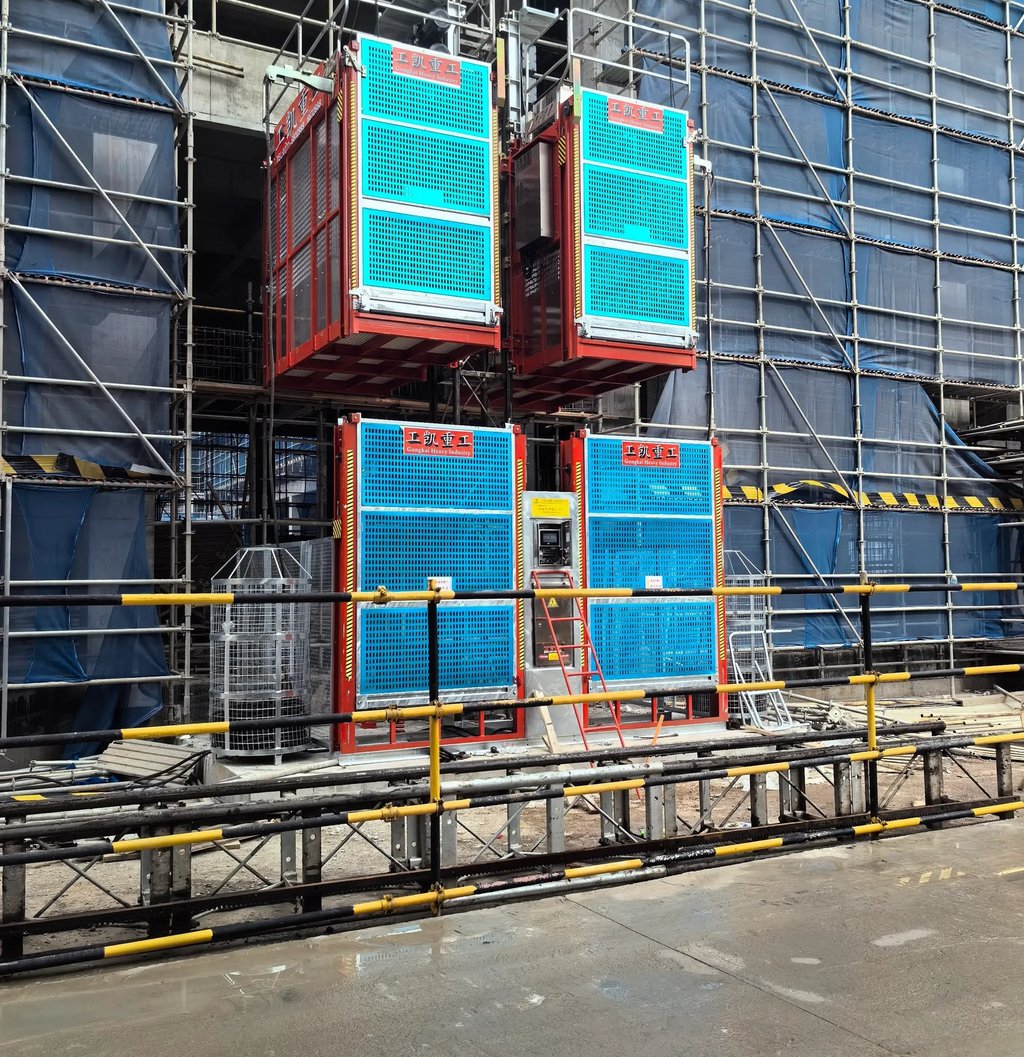
A construction hoist carries workers and materials up and down a building every day. A breakdown means stopped work. A safety failure means injuries or worse.
Regular maintenance is not optional — it's the difference between a hoist that runs 5+ years and one that fails in 18 months. This guide gives you a practical monthly checklist and safety guidelines based on EN 12159 standards and real-world field experience.
Why Regular Maintenance Matters
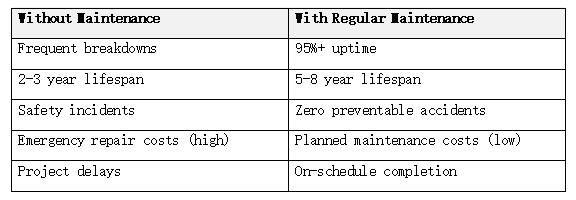
Rule of thumb: Every 8-12 in emergency repairs and downtime.
Daily Pre-Operation Checks (5 Minutes)
Before every shift, the operator should verify:
· ☐ Emergency stop button — Press and confirm it stops the hoist immediately
· ☐ Door interlocks — Hoist should not move with any door open
· ☐ Overload device — Test with known weight, confirm alarm activates
· ☐ Landing gates — All gates close and lock properly
· ☐ Visual inspection — No visible damage to mast sections, wire ropes, or electrical cables
· ☐ Noise check — Run empty for one cycle, listen for unusual sounds
· ☐ Communication — Two-way radio or intercom working between cages and ground
If any check fails — do not operate the hoist until repaired.
Monthly Maintenance Checklist
1. Mast Structure & Anchorage
· ☐ Inspect all mast section bolts — tighten any that have loosened (use torque wrench)
· ☐ Check wall ties / anchors — no cracks in building attachment points
· ☐ Verify mast verticality — deviation should not exceed 1/1000 of installation height
· ☐ Inspect mast section connections — no visible gaps or deformation
· ☐ Check rack and pinion gear engagement — teeth should mesh smoothly with <0.5mm backlash
2. Drive System
· ☐ Check gearbox oil level — top up if below minimum line
· ☐ Listen for gearbox noise during operation — grinding or whining indicates bearing wear
· ☐ Inspect motor mounting bolts — tighten if loose
· ☐ Check brake pad thickness — replace if worn below 3mm
· ☐ Test brake response — hoist should stop within 0.5 seconds of emergency stop
3. Wire Ropes & Sheaves (if applicable)
· ☐ Inspect entire rope length for broken strands — replace if >3 broken wires in one lay
· ☐ Check rope diameter — replace if reduced by 7% from original
· ☐ Lubricate wire ropes with approved lubricant
· ☐ Inspect sheave grooves — no excessive wear or deep scoring
· ☐ Verify rope anchoring at both ends — no slippage
4. Electrical System
· ☐ Check all cable connections — no loose terminals, no corrosion
· ☐ Inspect traveling cable (cable following the cage) — no cuts, kinks, or excessive wear
· ☐ Test limit switches — upper, lower, and door limit switches all functional
· ☐ Verify overload protection — test with calibrated weight
· ☐ Check contactors and relays — no pitting or welding of contacts
· ☐ Inspect control panel — clean dust, check for water ingress
5. Safety Devices
· ☐ Speed limiter / governor — Test per manufacturer instructions, must trigger at rated speed +15%
· ☐ Safety gear (catch device) — Drop test annually or per local regulations
· ☐ Buffer springs — At bottom landing, no deformation or rust
· ☐ Fall arrest device — Must engage within 200mm of overspeed detection
· ☐ Overload sensor — Calibrate if readings seem inaccurate
6. Cage & Landing Gates
· ☐ Inspect cage floor — no corrosion, no loose panels
· ☐ Check cage doors — open/close smoothly, interlock functioning
· ☐ Inspect landing gates at all levels — self-closing, positive locking
· ☐ Check cage guide rollers — replace if worn or producing vibration
· ☐ Clean cage interior — remove debris that could create tripping hazards
Common Problems & Quick Fixes
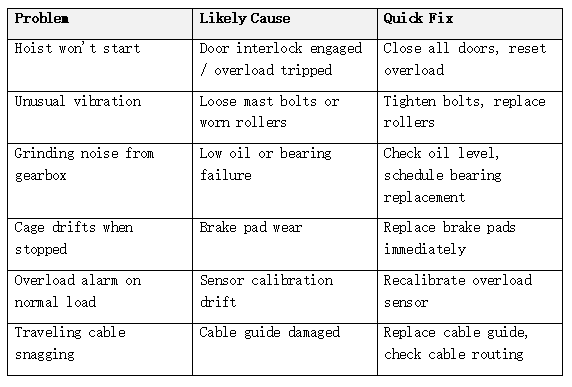
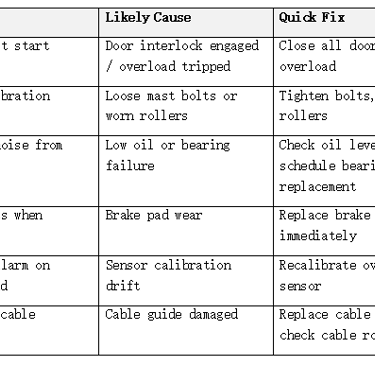
If the problem is not in this list, stop the hoist and contact the manufacturer. Do not attempt field repairs on safety-critical components (brakes, governors, safety gears).
Safety Guidelines for Operators
1. Never exceed rated capacity — The load rating exists for a reason. Overloading is the #1 cause of hoist accidents
2. One person, one role — The operator should not also be loading materials
3. No riding with loads — Workers and materials should not share the same cage trip (unless the hoist is rated for combined load)
4. Weather limits — Stop operation in winds exceeding the manufacturer's rated speed (typically 20-25 m/s for standard hoists)
5. Visibility — Do not operate if the operator cannot see the landing level
6. Load securing — All materials must be secured inside the cage before movement
7. No modifications — Never bypass safety devices, even temporarily
Annual Professional Inspection
In addition to monthly self-inspections, schedule an annual inspection by a qualified technician. This should include:
• Full brake system test and measurement
• Speed limiter / governor drop test
• Electrical insulation resistance test
• Structural integrity assessment (mast, ties, anchors)
• Complete drive system inspection
• Documentation and certification renewal
In many countries, this annual inspection is legally required. Check your local regulations — operating without a valid inspection certificate can result in fines and project shutdowns.
GKZG Maintenance Support
Every GKZG construction hoist ships with:
• Complete maintenance manual (English)
• Recommended spare parts list for first 2 years
• Remote technical support via video call
• Spare parts shipped within 7 days of order
Recommended spare parts to keep on site:
• Brake pads (2 sets)
• Limit switches (2 of each type)
• Guide rollers (4 pieces)
• Electrical fuses and contactors
• Gearbox oil (1 replacement cycle)
Need Maintenance Support or Spare Parts?
Whether you're maintaining a GKZG hoist or need technical advice on any construction hoist, we're here to help.
Email:ann.lin@gkzgtowercrane.com
WhatsApp: +86 19377161135
GKZG — CE certified construction hoist manufacturer. SC200/200ZN smart hoist with auto floor calling and 20-30% energy savings.
Connect GKZG
Get in touch for your project needs today.
Contact us
Tel/Whatsapp/Wechat:+86 19377161135
Copyright © 2026. Guangxi Gongkai Heavy Industry Manufacturing Co.,Ltd.All Right Reserved
Address: No.12 Fuqiao Avenue, Longan Overseas Chinese Administration District, Nanning, Guangxi,China