20+Years Specialized Manufacturer Of Tower Cranes And Construction Hoists

Flat Top vs Hammerhead Tower Crane: Which Is Right for Your Project?
6/16/20266 min read
ROI Consideration: While flat top cranes carry higher upfront costs, the operational advantages in confined spaces may generate savings through reduced site preparation, improved crane coordination, and avoidance of project delays.
When to Choose a Flat Top Tower Crane
Consider flat top configurations when your project involves:
1. Urban High-Rise Construction
Dense urban environments with multiple tower cranes operating simultaneously benefit from flat top's superior jib clearance. The ability to position cranes closer together maximizes usable building footprint and reduces structural interference.
2. Height-Restricted Sites
Projects near airports, under power lines, or within regulated airspace zones benefit from flat top's reduced headroom requirements. The 5-8% height advantage can be the difference between compliance and project cancellation.
3. Stadium and Arena Projects
Large-span roof structures often require cranes to work around complex geometries. The unobstructed jib profile of flat top cranes simplifies these challenging lifting operations.
4. Windy Conditions
With no cathead structure to catch wind, flat top cranes demonstrate improved stability in high-wind environments, extending productive working windows.
When to Choose a Hammerhead Tower Crane
Consider hammerhead configurations when your project involves:
1. Heavy Infrastructure Projects
Power plants, refineries, and heavy industrial facilities requiring sustained high-capacity lifts benefit from hammerhead's proven heavy-load performance characteristics.
2. Remote Site Access
Projects in remote locations without readily available auxiliary equipment favor hammerhead's self-erecting capability, reducing logistical complexity and costs.
3. Budget-Conscious Projects
When total project cost optimization is paramount and site conditions permit hammerhead operation, the 5-8% cost advantage becomes a meaningful factor in equipment selection.
4. Standard Building Configurations
Projects with conventional building geometries and adequate site access may not require flat top's specialized advantages, making hammerhead's cost profile more attractive.
Frequently Asked Questions (FAQ)
Q1: What is the main difference between flat top and hammerhead tower cranes?
The primary distinction lies in jib architecture. Flat top cranes feature a horizontal jib without a cathead structure at the apex, while hammerhead cranes have the characteristic T-shaped jib with a diagonal cathead. This structural difference impacts headroom requirements, jib overlap clearance, and erection complexity.
Q2: Which crane type is better for multi-crane job sites?
Flat top tower cranes are generally superior for multi-crane configurations due to their improved jib overlap clearance. The absence of a cathead allows cranes to operate in closer proximity without trolley interference, maximizing site efficiency in congested urban construction.
Q3: Are flat top cranes more expensive than hammerhead cranes?
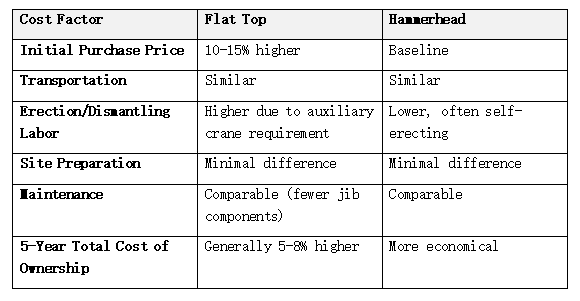
Yes, flat top cranes typically carry a 10-15% higher initial purchase price due to their specialized design. However, operational advantages in confined spaces may offset this premium through reduced site preparation costs and improved project efficiency.
Q4: Which crane type is easier to erect and dismantle?
Hammerhead cranes generally offer faster and simpler erection/dismantling processes due to their self-erecting capability and straightforward geometry. Flat top cranes typically require auxiliary crane support, adding 1-2 days to mobilization timelines.
Q5: Can I use either crane type for residential high-rise construction?
Both crane types are suitable for residential high-rise projects. The choice depends on specific site conditions: flat top for urban sites with height restrictions or multi-crane coordination needs; hammerhead for projects with conventional layouts and budget considerations.
Conclusion: Making the Right Choice for Your Project
Both flat top and hammerhead tower cranes represent mature, reliable technologies with distinct operational characteristics suited to different project requirements.
Choose Flat Top when:
• Operating in confined urban spaces with multiple cranes
• Site has height or airspace restrictions
• Complex building geometries require jib clearance
• Windy conditions impact crane selection
Choose Hammerhead when:
• Heavy infrastructure lifting dominates project scope
• Site access limits auxiliary equipment availability
• Budget optimization is the primary consideration
• Standard construction configurations apply
GKZG offers both [Internal Link: /products/flat-top-tower-crane] and [Internal Link: /products/hammerhead-tower-crane] series with comprehensive technical support, CE and ISO certification, and global spare parts availability. With 60,000㎡ of manufacturing facilities and 38 patents in crane technology, our engineering team provides tailored consultation to match equipment selection with your specific project parameters.
Ready to Select Your Tower Crane?
Contact GKZG today:
• Website: gkzgtowercrane.com
• Email: ann.lin@gkzgtowercrane.com
• WhatsApp: +86 19377161135
• Product Range: QTZP Flat Top Series (6t-12t) | QTZ Hammerhead Series (6t-12t)


Introduction
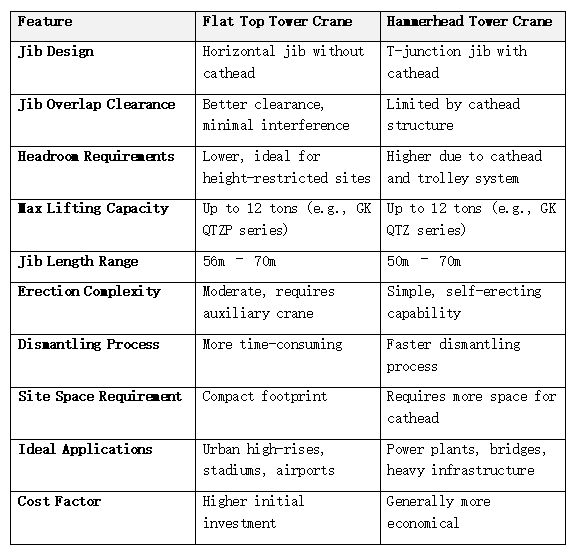
When selecting a tower crane for your construction project, the choice between a flat top and hammerhead design significantly impacts site efficiency, costs, and operational capabilities. Flat top tower cranes excel in confined urban sites with limited headroom and reduced jib overlap clearance, while hammerhead tower cranes offer superior lifting capacities and simpler erection processes for large-scale infrastructure projects. This comprehensive comparison provides procurement managers and site engineers with actionable insights to make informed equipment decisions aligned with your specific project requirements.
Quick Comparison: Flat Top vs Hammerhead Tower Crane
What Is a Flat Top Tower Crane?
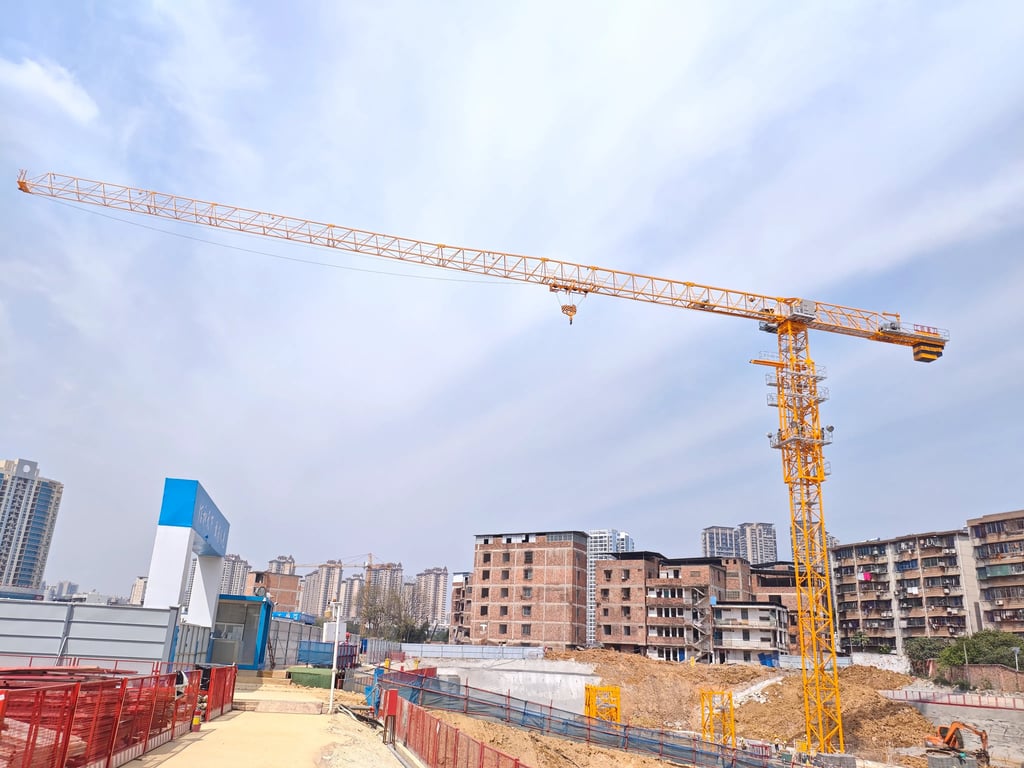
A flat top tower crane, also known as a topless tower crane, eliminates the traditional cathead structure at the jib apex. The counterjib and machinery platform sit directly atop the mast, creating a streamlined horizontal profile.
Key Advantages of Flat Top Tower Cranes
1. Superior Jib Overlap Clearance
The horizontal jib design eliminates the cathead obstruction, providing significantly improved clearance when multiple cranes operate in overlapping configurations. This makes flat top cranes essential for congested urban construction sites where multiple units work in tight formations.
2. Reduced Headroom Requirements
With no cathead structure, flat top cranes require less vertical clearance for operation. GK Heavy Industry's [Internal Link: /products/flat-top-tower-crane] QTZP series achieves working heights optimized for sites with airspace restrictions or nearby structures.
3. Enhanced Adaptability for Complex Geometries
The unobstructed jib design allows for more flexible tower configurations, particularly beneficial when cranes must work around existing structural elements or in irregularly shaped building footprints.
Typical Applications
• Urban high-rise residential and commercial buildings
• Stadium and arena construction with complex roof structures
• Airport terminal expansions
• Renovation projects in dense urban environments
• Wind turbine installation (for specific configurations)
What Is a Hammerhead Tower Crane?
A hammerhead tower crane features the classic T-shaped jib configuration, with the trolley operating on a horizontal jib supported by an angled diagonal cathead at the apex. This traditional design has dominated construction sites for decades.
Key Advantages of Hammerhead Tower Cranes
1. Proven Reliability and Simplicity
The hammerhead design represents over a century of engineering refinement. With fewer complex components in the jib structure, these cranes offer straightforward maintenance protocols and well-understood operational characteristics.
2. Easier Erection and Dismantling
The self-erecting capability of hammerhead cranes reduces dependency on auxiliary equipment. GK Heavy Industry's [Internal Link: /products/hammerhead-tower-crane] QTZ series features simplified erection sequences that minimize setup time and associated costs.
3. Excellent for Heavy Infrastructure Projects
The robust cathead structure accommodates higher tip loads and longer jib lengths, making hammerhead cranes the preferred choice for heavy civil engineering applications.
Typical Applications
• Power plant construction
• Bridge and highway infrastructure
• Heavy industrial facilities
• Shipyard operations
• Large-scale manufacturing facilities
• Projects with generous site access
5 Key Differences Between Flat Top and Hammerhead Tower Cranes
1. Jib Overlap Clearance
Flat Top: The absence of a cathead eliminates the primary obstruction point, allowing cranes to operate in closer proximity. Multiple flat top units can achieve tighter working configurations without compromising lifting paths.
Hammerhead: The T-junction cathead creates a fixed obstruction that limits the minimum working distance between overlapping jibs. This constraint often necessitates wider crane spacing or staggered working heights.
Impact: For projects requiring multiple crane coordination in confined spaces, flat top designs offer significant operational advantages.
2. Headroom Requirements
Flat Top: Lower overall height profile. GK's QTZP160 achieves comparable lifting heights with approximately 5-8% less vertical clearance requirement than equivalent hammerhead models.
Hammerhead: The diagonal cathead structure adds 3-5 meters to the minimum working height, which becomes critical in areas with airspace regulations or neighboring structures.
Impact: Sites with height restrictions—whether regulatory (airport proximity) or physical (power lines, existing buildings)—typically favor flat top configurations.
3. Lifting Capacity Range
Both configurations from [Internal Link: /products/tower-crane] can achieve similar maximum lifting capacities:
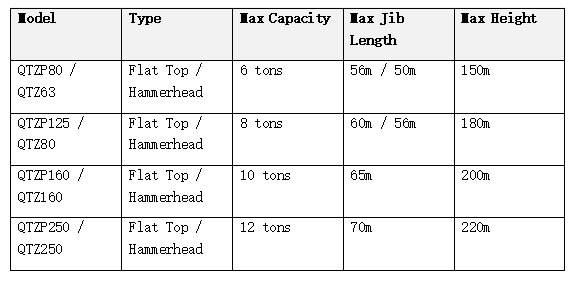
Nuance: Hammerhead designs often demonstrate superior performance in sustained tip load conditions, while flat top cranes may offer marginal advantages in maximum hook height scenarios.
4. Erection and Dismantling Complexity
Flat Top Erection Process:
• Requires auxiliary crane for initial assembly
• Hydraulic jib connection system simplifies final configuration
• Typical erection time: 5-7 days for standard configurations
• dismantling requires similar timeline
Hammerhead Erection Process:
• Self-erecting jib system reduces external equipment needs
• Standard erection time: 4-6 days for comparable capacities
• Faster dismantling due to simpler geometry
Impact: For projects with limited site access or tight mobilization schedules, hammerhead cranes may offer logistical advantages.
5. Cost Comparison
Connect GKZG
Get in touch for your project needs today.
Contact us
Tel/Whatsapp/Wechat:+86 19377161135
Copyright © 2026. Guangxi Gongkai Heavy Industry Manufacturing Co.,Ltd.All Right Reserved
Address: No.12 Fuqiao Avenue, Longan Overseas Chinese Administration District, Nanning, Guangxi,China