20+Years Specialized Manufacturer Of Tower Cranes And Construction Hoists

How to Install a Tower Crane
Standardized Installation Guidelines from Chinese Tower Crane Manufacturers Such as Gongkai Heavy Industry(GKZG)
4/17/20263 min read
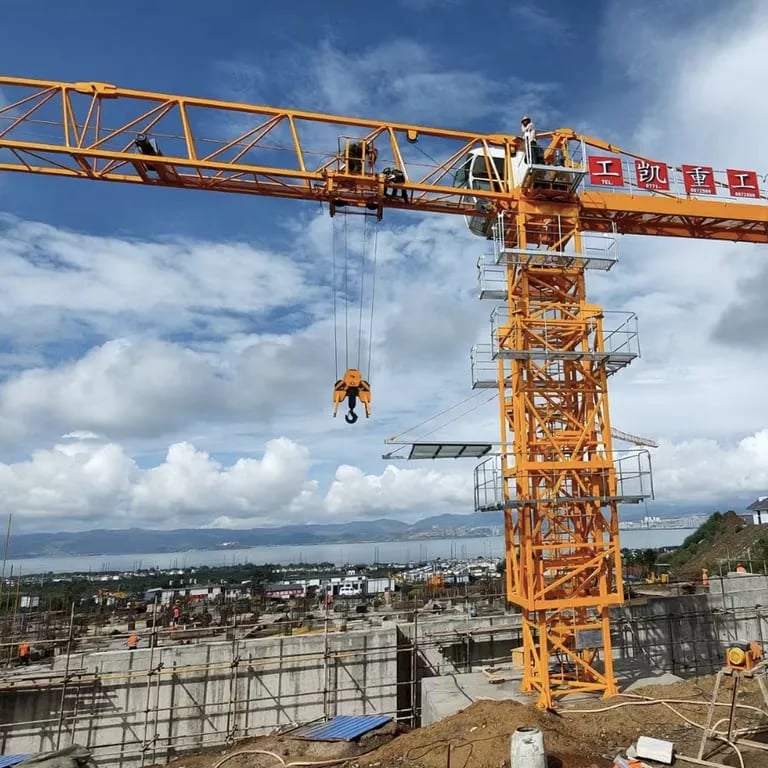
As a core lifting device in construction, the installation of tower cranes requires specialized expertise and meets stringent safety standards. As a leading Chinese tower crane manufacturer, Gongkai Heavy Industry(GKZG) leverages its mature product designs and standardized installation processes to provide safe and efficient installation solutions for the global engineering sector. This article systematically analyzes the key points of the entire tower crane installation process.
I. Pre-Installation Preparations
Three preliminary checks must be completed before formal installation begins: First, confirm that the strength of the tower crane foundation concrete test blocks meets 100% of the design requirements; this is a core prerequisite for ensuring the stability of the entire machine. Second, verify the qualifications of the installation contractor; all personnel must hold valid special operations certificates, and a comprehensive safety and technical briefing covering the construction environment and equipment parameters must be conducted for all staff prior to installation. Finally, the work site must be leveled. The mobile crane should be positioned 8–10 meters from the center of the tower crane foundation, with ground level deviation in the outrigger area ≤3 mm/m, ensuring the lifting radius fully covers the foundation area.
Gongkai Heavy Industry’s tower cranes are shipped with a complete set of installation manuals that clearly specify parameters such as the lifting weights of each component and compatible crane models. This helps contractors complete site and equipment preparations in advance, significantly reducing errors during the preliminary preparation phase.
II. Main Structure Installation Process
The installation of the tower crane’s main structure is carried out in a step-by-step, bottom-up sequence: First, hoist the base section into place, align it with the foundation anchor bolts, and secure it. Use specialized pins to connect the sections and insert safety pins. Simultaneously, install the hydraulic cylinder jacking beams inside the first section. Step 2: Install the jacking frame. After pre-assembling the frame platform and auxiliary components, position it over the outer side of the base section and connect the piston rod lugs to the jacking beam pivot points via pins. Step 3: Install the slewing bearing. After pre-assembling the slewing mechanism, operating platform, guardrails, and other components, hoist the entire assembly to the top of the standard section and secure it with pins.
Subsequently, the operator’s cab, tower top, main boom, and counterweight boom are hoisted into place in sequence. Counterweights corresponding to the specified weight requirements are installed according to the product design. Counterweights for light-duty tower cranes typically range from 3 to 4 tons, while those for heavy-duty models can reach up to 30 tons. Finally, the electrical wiring and safety devices are connected and commissioned. Chinese tower crane manufacturers generally adopt modular designs. All component interfaces on Gongkai Heavy Industry’s tower cranes feature standardized dimensions, allowing installation alignment errors to be controlled within 2 mm, which effectively improves installation efficiency.
III. Hoisting, Section Addition, and Acceptance/Delivery
Once the main structure is installed, the tower height can be increased using the built-in hydraulic hoisting system: During hoisting operations, the upper structure is first raised to the predetermined height, and standard sections are pushed into the sleeve frame to complete the connection. Repeating this process allows the crane to reach the height required for construction. Gongkai Heavy Industry’s tower cranes are equipped with an intelligent jacking monitoring system that continuously monitors levelness and pressure parameters during the jacking process. The system automatically triggers alerts in case of anomalies, significantly enhancing the safety of jacking operations.


Upon full installation, comprehensive inspections must be conducted, including load tests and calibration of safety devices. Devices such as torque limiters, weight limiters, and travel limit switches must all comply with national standards. The crane may only be officially put into service after passing acceptance inspections and obtaining a certificate of registration.
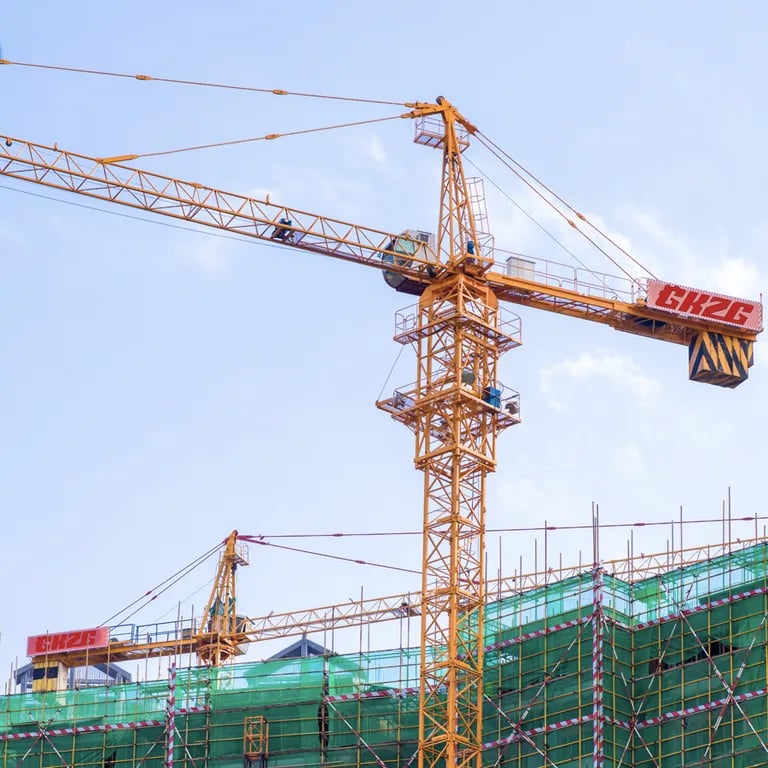
Currently, the installation technology of Chinese tower crane manufacturers has reached a globally leading level. Companies such as GKZG Tower Crane not only provide full-process installation guidance services but also customize installation solutions for specific construction scenarios, providing reliable support for the efficient advancement of various major projects.
Connect GKZG
Get in touch for your project needs today.
Contact us
Tel/Whatsapp/Wechat:+86 19377161135
Copyright © 2026. Guangxi Gongkai Heavy Industry Manufacturing Co.,Ltd.All Right Reserved
Address: No.12 Fuqiao Avenue, Longan Overseas Chinese Administration District, Nanning, Guangxi,China