Specialized Manufacturer Of Tower Cranes And Construction Hoists

Step-by-Step Guide for Construction Hoist Operation
12/24/20253 min read
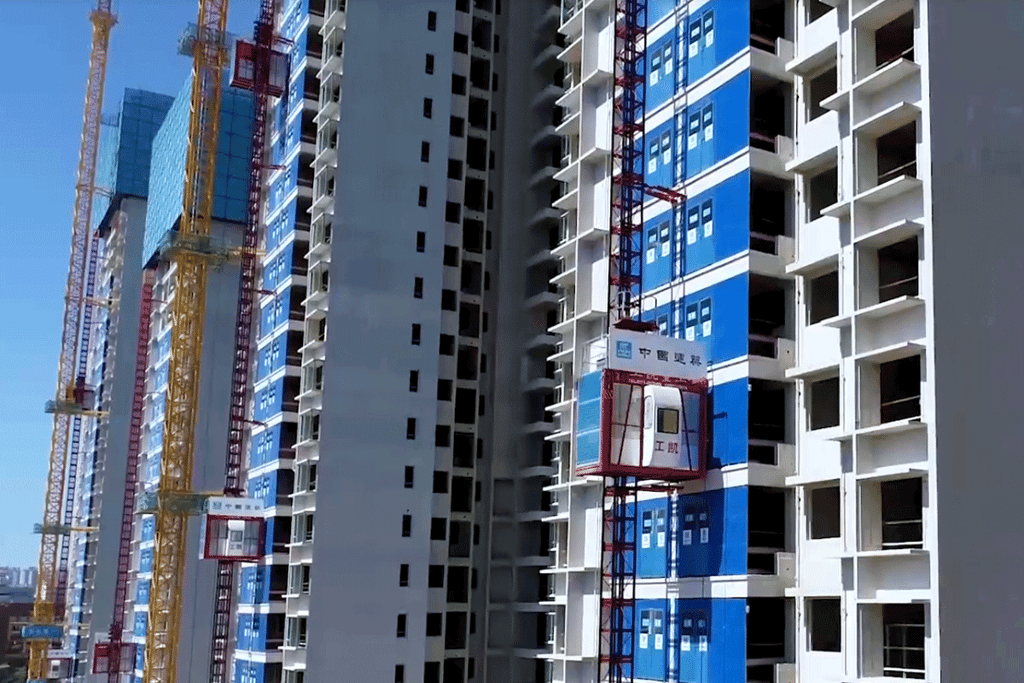
Construction hoists are indispensable vertical transport equipment on building sites, and their safe operation directly impacts personnel safety and project progress. To ensure standardized usage, the following step-by-step guide covers critical aspects including pre-operation preparation, operational procedures, and emergency response.
I. Construction Hoists Pre-Operation Preparation
Inspect Equipment Condition
Confirm no visible deformation, corrosion, or loose components on the hoist exterior. Verify stability of guide rail frames, wall-anchor devices, and cage structures.
Test sensitivity of limit switches (upper/lower limits, door limits) and functionality of emergency braking systems.
Inspect cables for integrity—no damage or exposed wiring—and ensure effective grounding protection.
Verify communication devices (walkie-talkies or signal lights) are operational to ensure unimpeded contact with ground personnel.
Environmental Safety Confirmation
Clear debris from the cage and ensure load does not exceed rated capacity (typically marked on the equipment nameplate).
Inspect the travel path for obstructions such as rebar or formwork to prevent collisions.
Confirm suitable weather conditions (cease operation if wind speed exceeds 13 m/s or during thunderstorms).
Personal Protection & Qualifications
Operators must hold valid special equipment operation certificates and wear safety helmets, slip-resistant shoes, and reflective vests.
Unauthorized personnel are prohibited from entering the cage. Passengers must secure personal tools to prevent falling.
II. Construction Hoists Startup and Operation Procedures
Startup Steps
Close the main power switch and observe control panel indicator lights (green indicates power on, red indicates fault).
Press the “Start” button. Allow the cage to ascend slowly until it pauses 1 meter above ground level to test braking performance.
After confirming no abnormalities, use the control lever to select the upward or downward direction, gradually accelerating to the target floor.
Operating Standards
Maintain steady speed: Avoid sudden acceleration or braking to prevent cargo shifting or personnel falls.
Stop at each floor: Fully stop before opening doors at every level; opening/closing doors during operation is strictly prohibited.
No overloading: If the overload alarm sounds, immediately unload until below the rated capacity.
Occupancy Limits: Do not exceed the designed capacity (typically 9-12 persons). Climbing railings or leaning against door edges is prohibited.
Special Scenario Operations
Multi-Lift Coordination: When multiple lifts operate simultaneously, maintain unified command and synchronized movement.
Night Operations: Activate cabin lighting and ensure adequate site illumination to eliminate blind spots.
Inclined Ground Operation: Adjust outriggers to level position and reinforce foundation with shims to prevent tipping.
III. Construction Hoists Shutdown and Maintenance
Shutdown Procedure
Lower the cage to the lowest level, disconnect the main power supply, and lock the control box.
Close all floor doors and hang a “Do Not Use” warning sign to prevent accidental operation.
Complete the operation log, including runtime, fault details, and maintenance recommendations.
Daily Maintenance Essentials
Cleaning: Daily removal of debris from the cage. Inspect track lubrication and replenish gear oil as needed.
Tightening: Weekly checks for loose bolts and pins, with special attention to wall-tie connections.
Corrosion Prevention: Monthly application of rust-proof paint to metal components. Replace aged cables.
Professional Inspection: Quarterly comprehensive checks by qualified personnel of motors, gearboxes, and safety devices.
IV. Construction Hoists Emergency Procedures
Sudden Malfunction
If the cage becomes stuck mid-air, immediately press the “Emergency Stop” button and contact ground personnel via communication equipment.
Do not attempt to climb onto the cage top or evacuate using non-professional methods. Wait for rescue personnel to operate the manual descent device.
Personnel Injury
Immediately halt the elevator and disconnect power. Call emergency services and administer initial treatment using the on-site first-aid kit.
Preserve the scene, photograph evidence, and cooperate with safety investigations.
Fire Response
Use dry powder extinguishers for initial fires. If flames spread, evacuate immediately and activate the site fire emergency plan.
Conclusion
Safe operation of construction hoists strictly adheres to the principle of “prevention first, standardized operation.” Operators must undergo regular safety training, thoroughly understand equipment capabilities, and eliminate complacency. Standardized procedures and routine maintenance minimize accident risks, ensuring construction safety and efficiency.
Connect
Get in touch for your project needs today.
Contact us
Email:ann@gkzgtowercrane.com
Tel/Whatsapp/Wechat:+86 13437895301
Copyright © 2025. Guangxi Gongkai Heavy Industry Manufacturing Co.,Ltd.All Right Reserved
Address: No.12 Fuqiao Avenue, Longan Overseas Chinese Administration District, Nanning, Guangxi,China