20+Years Specialized Manufacturer Of Tower Cranes And Construction Hoists

The Ultimate Guide to Construction Hoists: Should You Choose a Single or Twin Cage?
7/13/20263 min read
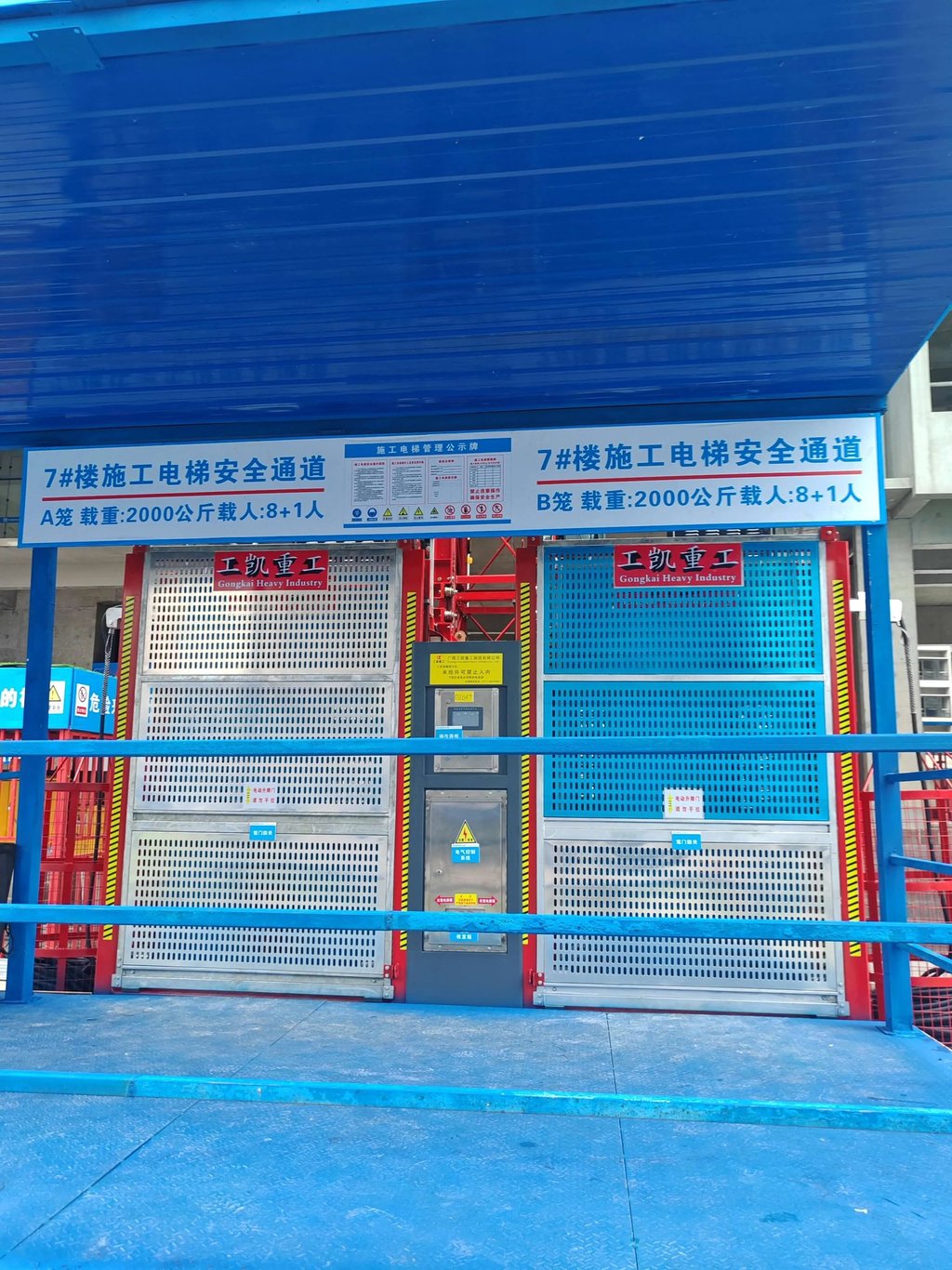
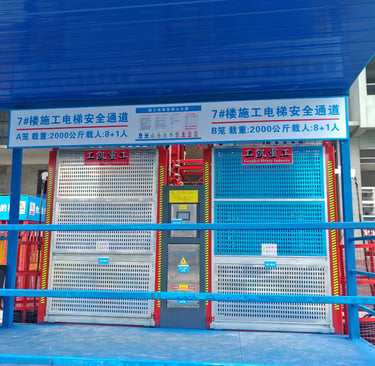
1. Logistics and Traffic Flow
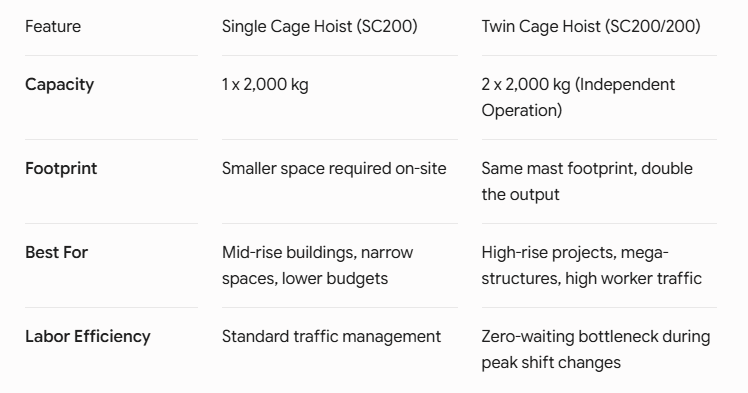
During morning shift changes, hundreds of workers need to reach upper floors simultaneously. A single cage can create massive bottlenecks, leading to expensive idle labor time. A twin cage hoist allows both cages to run independently on a single mast structure—effectively doubling your vertical transport capacity without doubling your structural footprint.
2. Material vs. Passenger Separation
With a twin cage setup, many site managers designate Cage A for passengers only and Cage B for heavy materials. This keeps workers moving safely without waiting for heavy palettes or concrete blocks to be unloaded.
Critical Safety Features to Look For
When importing heavy machinery, safety certification isn't just a legal checkbox—it protects lives. Whether you are operating in Southeast Asia, the Middle East, or Latin America, ensure your hoist includes:
Anti-Drop Safety Device (SAJ Device): The absolute most critical safety component. If the lifting cage exceeds its rated speed, this mechanical device locks onto the mast instantly to prevent a free-fall.
Overload Limiters: Electronic sensors that prevent the hoist from operating if the weight exceeds the 2,000 kg threshold.
Interlocking Gate Systems: Mechanical and electrical interlocking doors that ensure the cage cannot move unless all gates are fully closed and secured.
Moving Toward the Future: Smart Construction Hoists
The construction industry is shifting toward digitalization, and lifting equipment is leading the charge. Modern building hoists are increasingly integrating smart fault-diagnosis systems, automated floor calling, and weight monitoring screens.
Investing in smart hoists reduces maintenance downtime because the machine tells your mechanics exactly which sensor or brake pad needs attention before a breakdown happens.
Conclusion: Which One Fits Your Fleet?
If your projects are primarily under 15 floors with moderate labor forces, a Single Cage SC200 is a highly cost-effective, reliable workhorse. However, for true high-rise developments where project delays carry heavy penalties, upgrading to a Twin Cage SC200/200 Construction Hoist pays for itself in labor efficiency within the first few months.
Looking for Reliable Lifting Solutions?
At GKZG, we specialize in manufacturing heavy-duty, certified, and smart construction hoists tailored for global markets.
👉 [Contact our foreign trade team today] for a customized quotation, technical specifications, or to discuss regional access certifications for your next project.
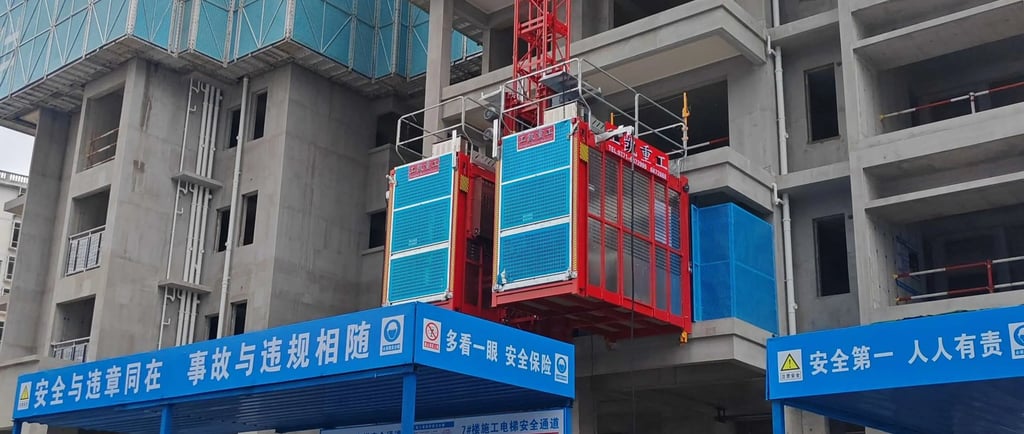
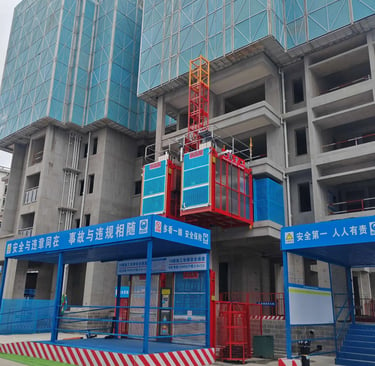
In high-rise construction, time is quite literally money. Every minute workers spend waiting at the base of a skyscraper or transporting heavy materials manually drags down your project timeline. That is where the construction hoist (also known as a passenger and material elevator) becomes the backbone of your job site.
As a leading construction hoist manufacturer, we frequently get asked by project managers: "Should we invest in a single cage or a twin cage construction hoist for our next project?"
Let’s break down the mechanics, efficiency, and ROI (Return on Investment) to help you make the right choice for your fleet.
What is a Construction Hoist? (The Basics)
A construction hoist utilizes a rack and pinion system to safely drive a cage up and down a vertical mast section. Unlike standard industrial lifts, building hoists are engineered specifically for the rugged, high-load demands of active construction sites, safely transporting both personnel and heavy materials like bricks, concrete, and tools.
The industry standard for mid-to-high-rise projects is the SC200/200 construction hoist, where each cage has a carrying capacity of 2,000 kg (2 Tons).
Single Cage vs. Twin Cage: Key Differences
Choosing between a single cage (e.g., SC200) and a twin cage (e.g., SC200/200) depends entirely on your building's height, worker footprint, and budget.
Connect GKZG
Get in touch for your project needs today.
Contact us
Tel/Whatsapp/Wechat:+86 19377161135
Copyright © 2026. Guangxi Gongkai Heavy Industry Manufacturing Co.,Ltd.All Right Reserved
Address: No.12 Fuqiao Avenue, Longan Overseas Chinese Administration District, Nanning, Guangxi,China