Specialized Manufacturer Of Tower Cranes And Construction Hoists

What safety features should construction hoists possess?
12/24/20253 min read
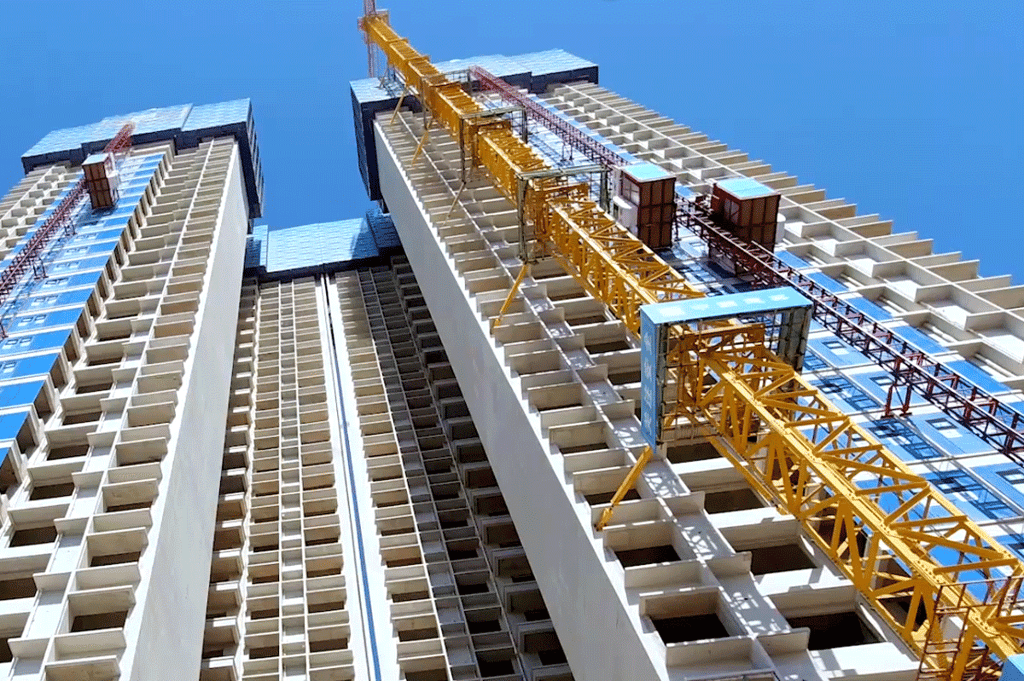
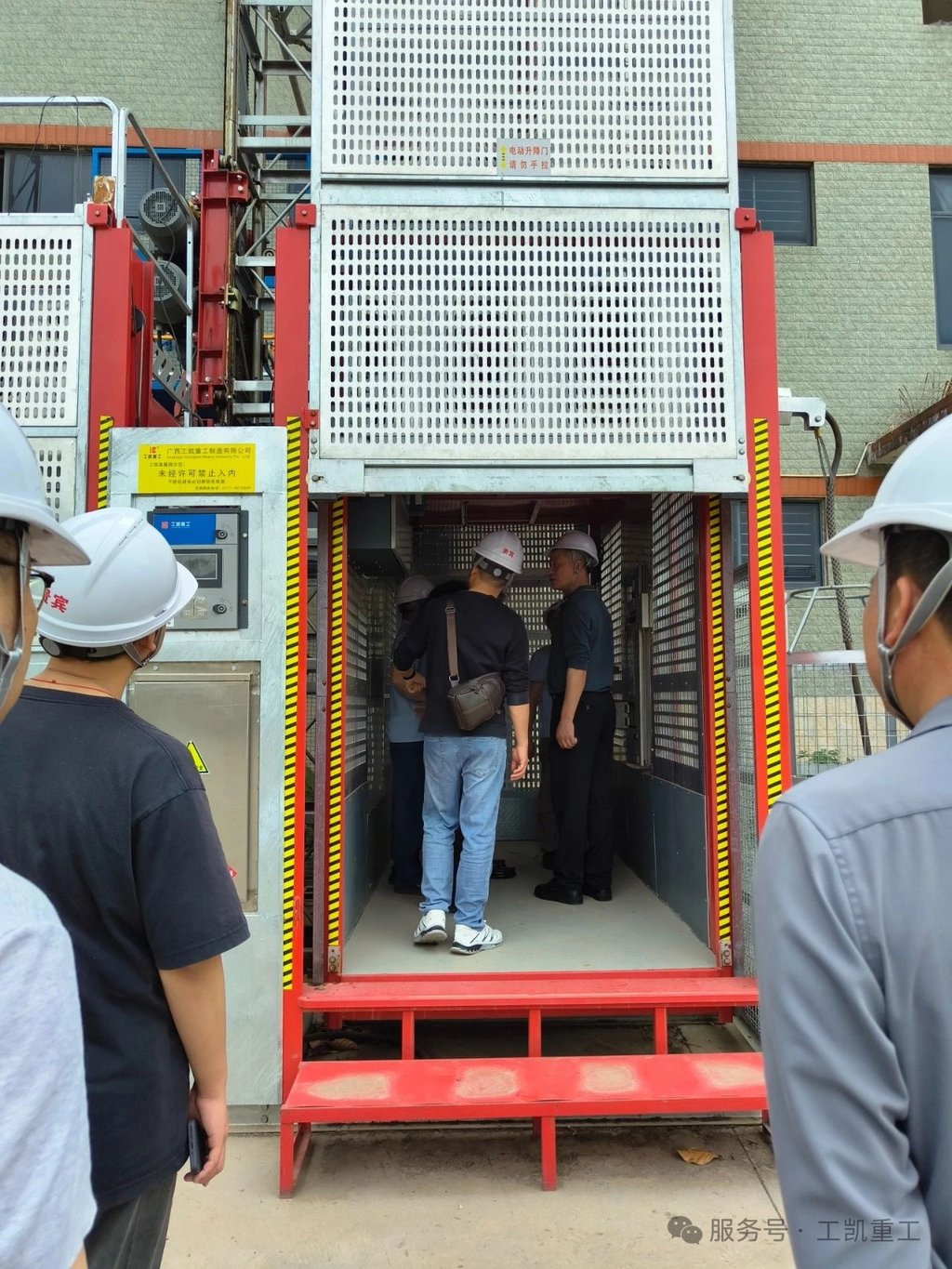
As the core vertical transportation equipment in construction projects, the safety performance of construction hoists directly impacts personnel safety and project progress. According to national standards and industry regulations, modern construction hoists must be equipped with multiple safety protection systems, forming a comprehensive safety network spanning mechanical structures to electrical controls. The following analysis covers six core safety functions.
Progressive Fall Arrestor
Utilizing a rack-and-pinion transmission principle, when the cage exceeds its rated speed (typically 1.2 times) or the wire rope breaks, the centrifugal weights within the arrestor trigger a ratchet mechanism. Friction pads then brake the cage to a stop within 0.5 meters. This device requires monthly fall tests to ensure the braking distance complies with GB/T 34023-2017 standards.
Overspeed Protection System
Speed sensors continuously monitor operating velocity. When exceeding the rated speed by 10%, the system automatically cuts power and activates mechanical brakes. For example, a certain brand of elevator achieves full braking within 0.2 seconds when reaching 36m/min (rated at 30m/min).
II. Structural Safety Protection
Anti-Overturn Device
Wall brackets feature an adjustable design, secured to the building structure with high-strength bolts at intervals of 6-9 meters. When the cage experiences uneven loading or lateral wind forces, the gap between the anti-overturn guide wheels and the guide rail frame is maintained at 2-3mm to ensure operational stability. Calculations indicate that a 60-meter elevator maintains vertical deviation ≤1‰ under 8-grade winds (17.2 m/s).
Guardrail and Door Interlock
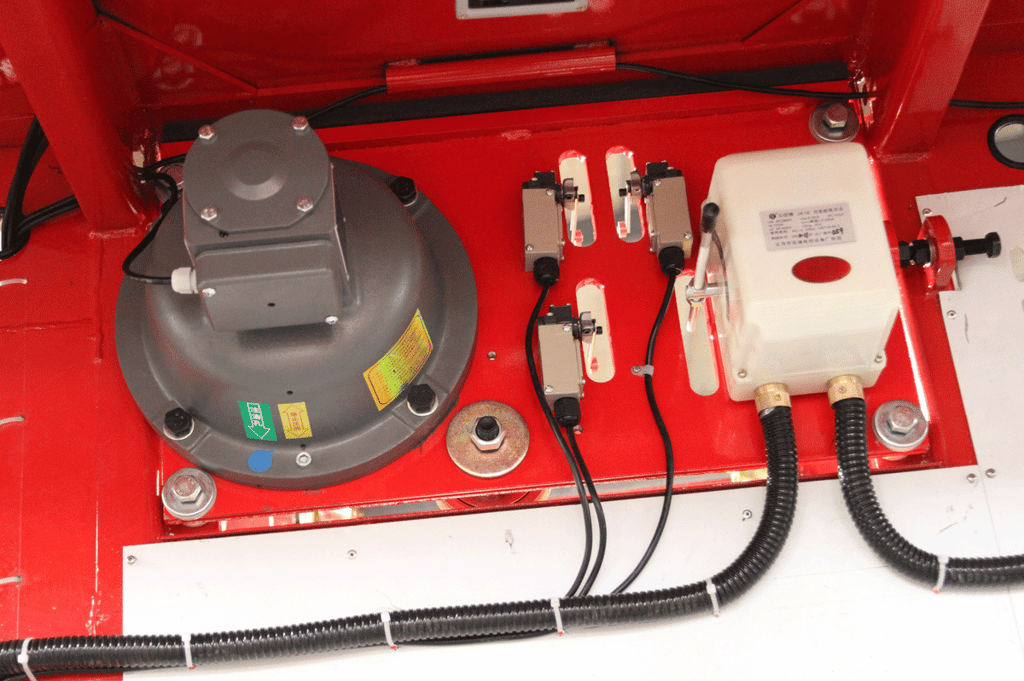
A 1.8-meter-high fully enclosed guardrail is installed at the base level, equipped with a double-door interlock mechanism. The cage will only start operation when all floor doors are fully closed and locked. Door limit switches employ redundant design; failure of any switch triggers emergency braking.
III. Electrical Safety Controls
Overload Protection System
Load is monitored in real-time via load cells. Audible and visual alarms activate at 10% overload, with automatic power cutoff at 20% overload. For example, a lift rated at 2000kg will alarm at 2200kg and stop at 2400kg.
Short Circuit and Ground Fault Protection
The main power distribution box employs a three-level power distribution system with 30mA ground fault circuit interrupters (GFCIs) that activate within ≤0.1 seconds. Control circuits feature independent short-circuit protection devices, ensuring power disconnection within 0.5 seconds during sudden short circuits.
IV. Operational Monitoring System
Limit and Extreme Protection
Upper and lower limit switches (action distance ≥300mm) and upper and lower extreme switches (action distance ≥800mm) are installed. If limit switches fail, extreme switches enforce shutdown to prevent cage over-traveling or bottoming out. Test data confirms this system ensures reliable braking within 100 meters of cage height.
Communication and Video Surveillance
The cage is equipped with a walkie-talkie or wireless communication device to maintain real-time contact with the ground command center. Some high-end models feature 360° panoramic cameras, allowing the operator to monitor the operating environment in real time and avoid collisions with obstacles.
V. Environmental Adaptation Functions
Lightning Protection and Grounding System
A lightning rod is installed at the top of the guide rail frame with grounding resistance ≤4Ω. During thunderstorms, it effectively diverts lightning currents into the ground, protecting equipment and personnel safety.
Wind Speed Monitoring and Early Warning
Equipped with wind speed sensors, the system triggers automatic alarms when wind speeds exceed 13 m/s and initiates forced shutdowns at 20 m/s. Field tests at a construction site demonstrated this system successfully preventing three overturn incidents during typhoon conditions.
VI. Emergency Rescue Devices
Manual Descent Device
In the event of power failure or malfunction, the cage can be manually lowered to the nearest floor at a controlled speed. This device requires quarterly functional testing to ensure descent speed remains below 0.5m/min.
Emergency Lighting and Escape Routes
The cage is equipped with an independent battery-powered lighting system providing ≥30 minutes of continuous operation. Escape ladders or descenders are installed at landing doors to ensure rapid evacuation during emergencies.
Conclusion
Modern construction hoists establish comprehensive safety barriers by integrating four core systems: mechanical protection, electrical control, intelligent monitoring, and emergency rescue. Statistics indicate that hoists equipped with complete safety features can reduce accident rates by over 85%. Construction companies must strictly adhere to the “one machine, one file” management principle, conducting regular inspections and maintenance of safety devices to ensure equipment remains in a safe and controllable state, providing robust safeguards for construction operations.
Connect
Get in touch for your project needs today.
Contact us
Email:ann@gkzgtowercrane.com
Tel/Whatsapp/Wechat:+86 13437895301
Copyright © 2025. Guangxi Gongkai Heavy Industry Manufacturing Co.,Ltd.All Right Reserved
Address: No.12 Fuqiao Avenue, Longan Overseas Chinese Administration District, Nanning, Guangxi,China