Specialized Manufacturer Of Tower Cranes And Construction Hoists

Safety Measures for Construction Hoists
12/26/20252 min read
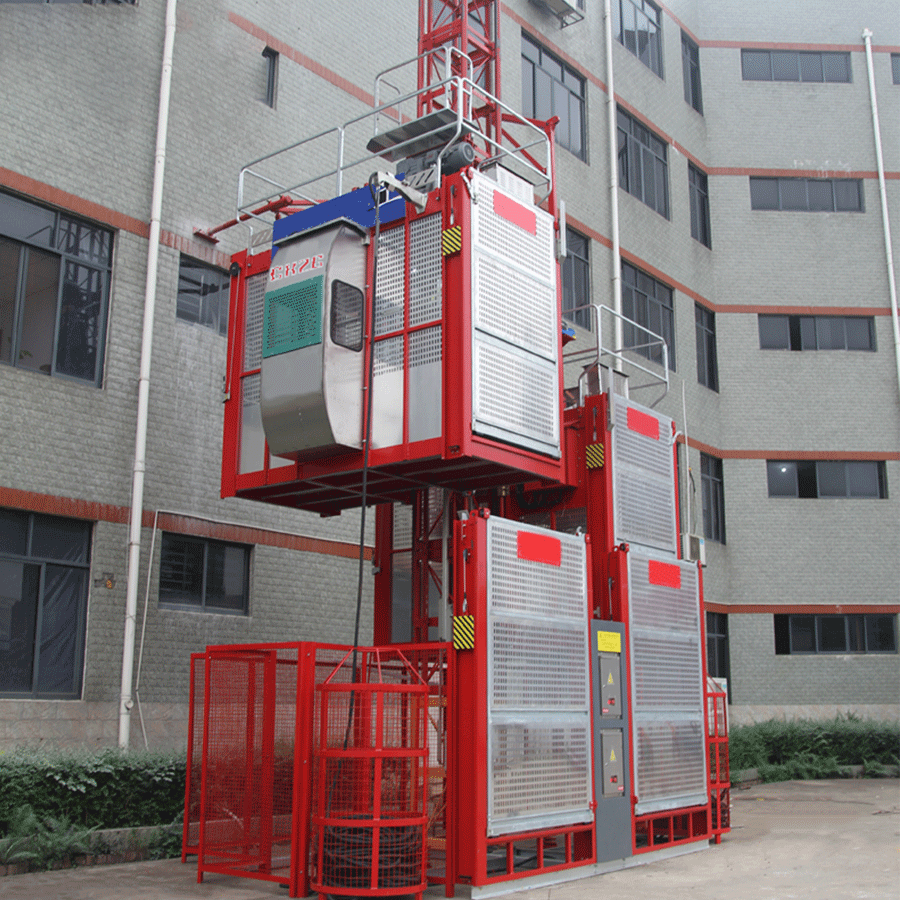
In the construction industry, construction hoists serve as vital vertical transportation equipment, undertaking the critical task of efficiently and conveniently transporting personnel and materials. However, due to the complexity of their operating environment and the unique nature of their operation, safety incidents often result in severe casualties and property damage. Therefore, implementing comprehensive and effective safety measures is paramount.
Rigorous Equipment Selection and Installation
Construction hoist selection must be based on specific project requirements and site conditions. Factors such as building height, load capacity, and construction schedule must be comprehensively considered to choose equipment with stable performance, reliable quality, and compliance with relevant national standards. Installation should be performed by a team possessing professional qualifications and extensive experience. Prior to installation, foundations must undergo precise measurement and reinforcement to ensure they can withstand the operational loads of the hoist. Installation must strictly follow the manual and specifications, with each component installed accurately and securely fastened. After installation, comprehensive commissioning and testing—including no-load, full-load, and overload tests—must be conducted to verify that all performance metrics meet standards and ensure smooth, reliable operation.
Standardized Operation and Personnel Training
Operators are critical to the safe operation of construction hoists. All operators must undergo professional training and obtain the corresponding operating certification before being permitted to work. Training must cover not only operational skills—such as starting, stopping, lifting, lowering, and braking—but also safety knowledge and emergency response procedures. This training ensures operators understand the equipment's performance characteristics, master correct operating methods, and enhance their safety awareness and emergency response capabilities. During operation, personnel must strictly adhere to operating procedures. Violations such as overloading, speeding, or operating under the influence of alcohol are strictly prohibited. Additionally, operators must closely monitor the equipment's operational status. If abnormal noises, vibrations, odors, or other irregularities are detected, operation must be immediately halted for inspection and maintenance.
Regular Maintenance and Inspection
During prolonged operation, construction hoists experience component wear and aging due to various factors. Failure to perform timely maintenance and inspections may lead to safety incidents. Therefore, establishing a comprehensive regular maintenance and inspection system is crucial. Maintenance personnel must conduct comprehensive inspections and maintenance at specified intervals, covering critical systems including electrical, transmission, braking, and safety devices. Severely worn components should be replaced promptly, loose parts tightened, and lubrication points replenished with appropriate lubricants. Additionally, equipment must be kept clean and free of dust or debris that could compromise normal operation.
Enhancing Safety Protection Devices
Construction hoists must be equipped with comprehensive safety protection devices, including fall arresters, limit switches, door limit devices, and overload protection systems. The fall arrester is one of the most critical safety devices, capable of rapidly braking the equipment during a fall to safeguard personnel and equipment. Limit switches prevent the equipment from exceeding its designated operating range, avoiding collision accidents. Door limiters ensure the equipment operates only when both landing doors and cage doors are fully closed, preventing personnel falls. Overload protection devices continuously monitor load weight; when exceeding the rated capacity, they automatically trigger alarms and halt operation. These safety devices require regular inspection and testing to guarantee their responsiveness and reliability.
Ensuring construction hoist safety is a systematic endeavor. Comprehensive and effective measures must be implemented across multiple fronts—including equipment selection and installation, operator training, regular maintenance inspections, and safety device provision—to guarantee safe operation and provide robust support for smooth construction progress.
Connect
Get in touch for your project needs today.
Contact us
Email:ann@gkzgtowercrane.com
Tel/Whatsapp/Wechat:+86 13437895301
Copyright © 2025. Guangxi Gongkai Heavy Industry Manufacturing Co.,Ltd.All Right Reserved
Address: No.12 Fuqiao Avenue, Longan Overseas Chinese Administration District, Nanning, Guangxi,China